Madhur Sangrah - Where Paper Meets Pixel

दिनांक 20 अप्रैल 2026 दिन सोमवार विक्रम संवत् 2083 वैशाख शुक्ल पक्ष तृतीया (अक्षय तृतीया) की हार्दिक शुभकामनाएं!**यह साइट अभी निर्माणाधीन है!**
दिनांक 20 अप्रैल 2026 दिन सोमवार विक्रम संवत् 2083 वैशाख शुक्ल पक्ष तृतीया (अक्षय तृतीया) की हार्दिक शुभकामनाएं!**यह साइट अभी निर्माणाधीन है!**
Translate
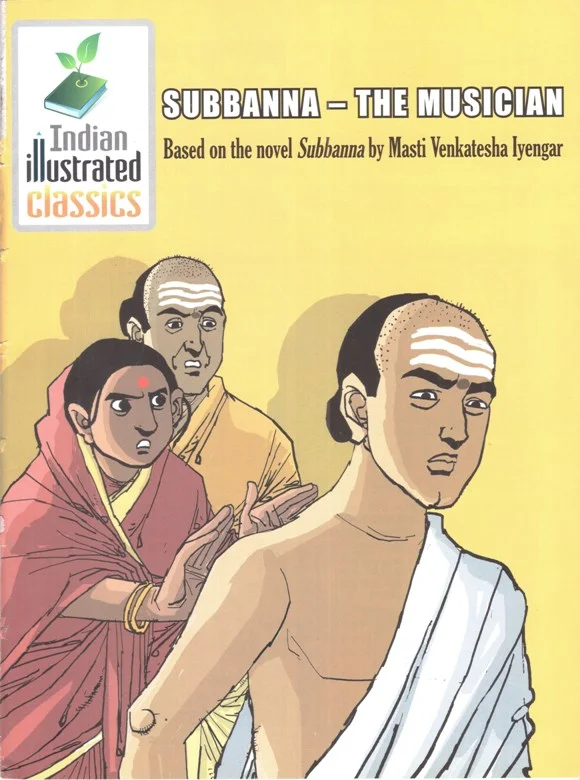
Subbanna-The Musician
Wednesday, 22/07/2026 05:29 PM
Subbanna-The Musician
Subbanna- The Musician
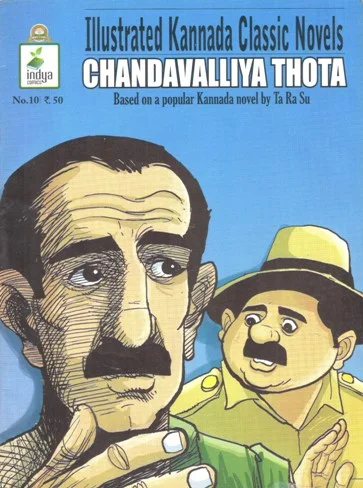
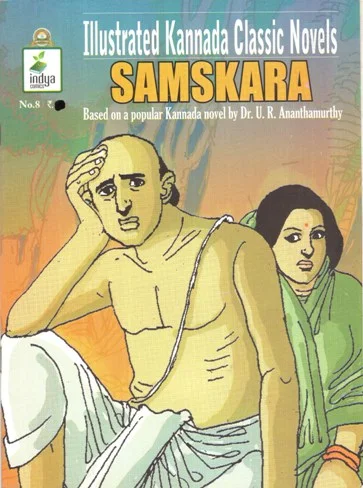
 Indian Illustrated Classics is an innovative literary project under which well known novels in seven Indian regional languages will be published in a simple and colorfully illustrated format. The idea is to introduce well known Indian literature and their writers to the reading masses. Each Indian Illustrated Classics book contains six well known novels which are individually summarized in just 32 pages and the entire story unfolds in a colorfully illustrated format. This way the reading process is simplified and the story is easily understood in a matter of minutes. The hallmark of Indian Illustrated Classics is all about inspiring readers towards fostering Indian literature, thus creating many more readers and admirers of the profound legacy of Indian writers and their best known books. It's also a matter of pride that Indian Illustrated Classics is the first and the only effort of its kind towards adapting and globalizing Indian literature in the graphical form of illustrations. Thus Indian Illustrated Classics is a dedication of our glowing tribute to the rich literary heritage of India.
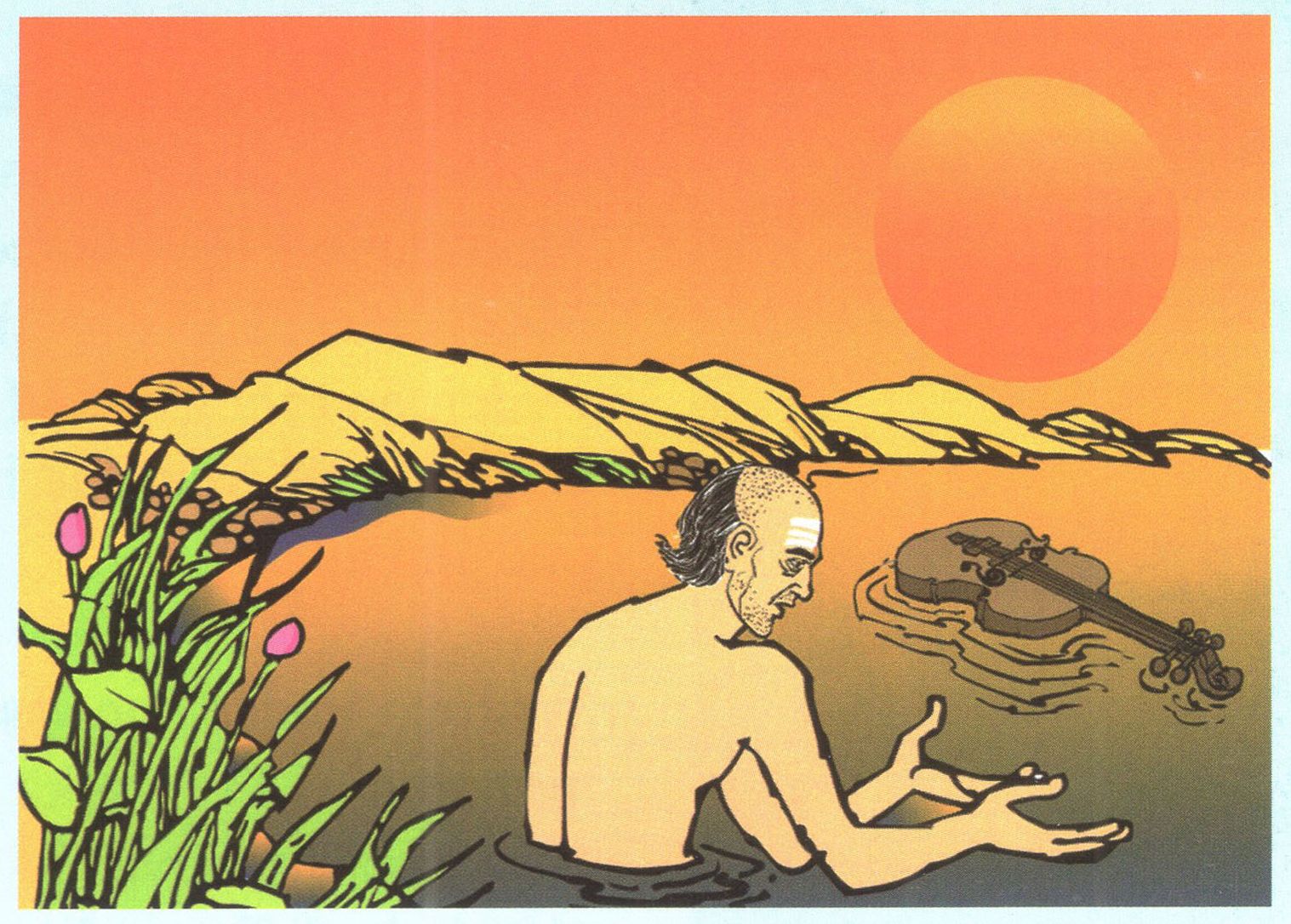
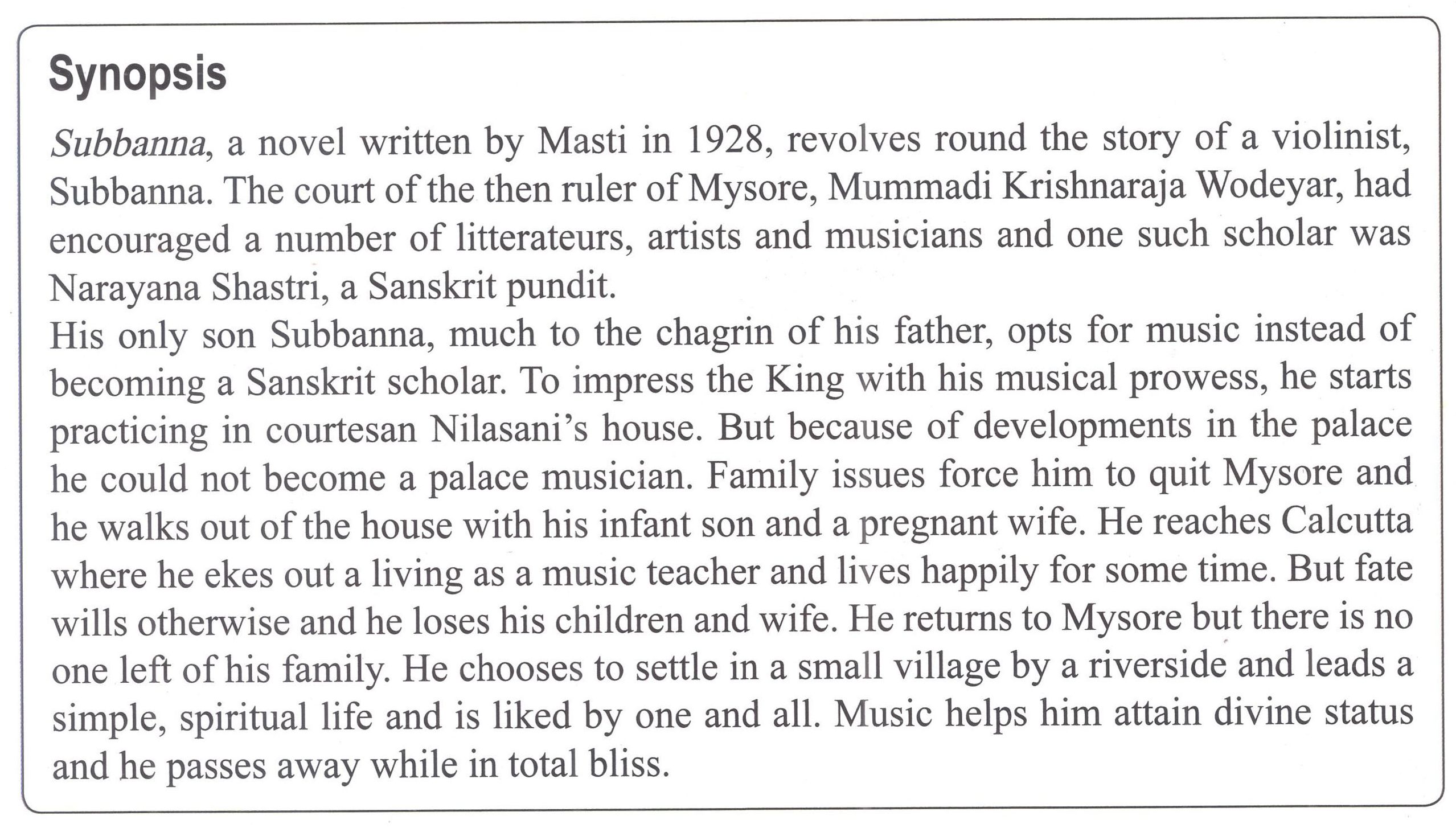 This Pictorial Book under this category is being based on "Subbanna", a novel written by Masti in 1928, revolves round the story of a violinist, Subbanna. The court of the then ruler of Mysore, Mummadi Krishnaraja Wodeyar, had encouraged a number of litterateurs, artists and musicians and one such scholar was Narayana Shastri, a Sanskrit pundit. His only son Subbanna, much to the chagrin of his father, opts for music instead of becoming a Sanskrit scholar. To impress the King with his musical prowess, he starts practicing in courtesan Nilasani's house. But because of developments in the palace he could not become a palace musician. Family issues force him to quit Mysore and he walks out of the house with his infant son and a pregnant wife. He reaches Calcutta where he ekes out a living as a music teacher and lives happily for some time. But fate wills otherwise and he loses his children and wife. He returns to Mysore but there is no one left of his family. He chooses to settle in a small village by a riverside and leads a simple, spiritual life and is liked by one and all. Music helps him attain divine status and he passes away while in total bliss.
About The Author
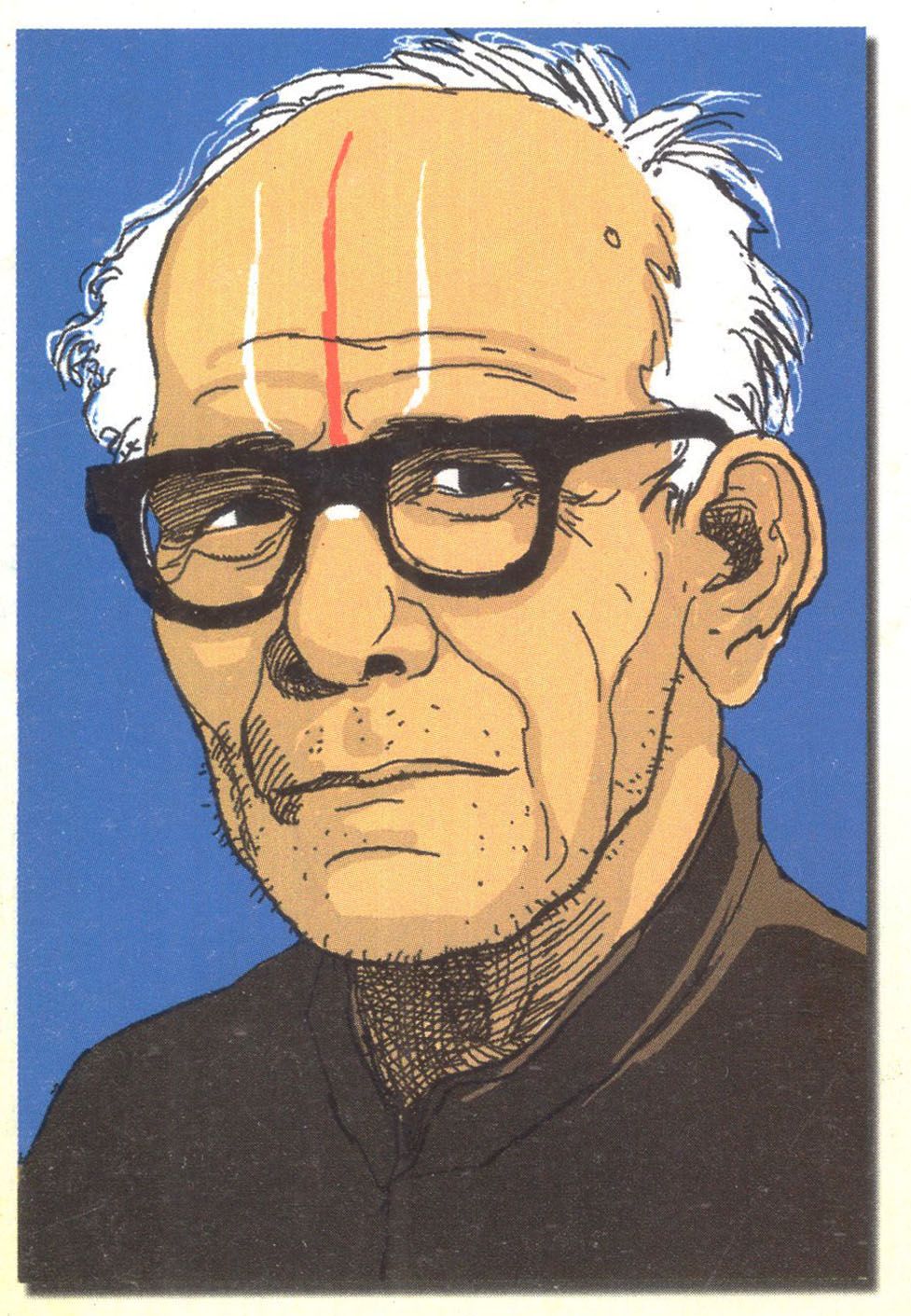 Masti Venkatesha Iyengar (1891 - 1986)
Masti is a towering personality in Kannada literature. A recipient of the prestigious Gnanapith award for his contribution to Kannada literature he is referred to as Masti, Kannada's aasthi - meaning treasure. A prolific writer, an efficient and honest administrator in the state government Masti is highly revered and respected by one and all. Writing under the pseudonym Srinivasa, Masti has authored 123 works in Kannada, beginning with 'Rangana Maduve' in 1910 to 'Maatugaara Ramanna' (1985) in different literary forms such as novels, plays, essays, short-stories and poetry. He is most renowned for his short stories. He was honored with the title Rajasevasakta by the then ruler of Mysore Nalvadi Krishnaraja Wodeyar. Masti was born in 1891, at Hongenahalli in Kolar district of Karnataka in a Tamil speaking Sri Vaishnavaite family. He spent his early childhood in Masti village. Due to poverty, he moved from place to place until he obtained a master's degree in 1914 from Madras University. After joining the Indian Civil Service (Known as the Mysore Civil Service in the days of the Maharaja of Mysore), he held various positions of responsibility in different parts of Karnataka, rising to the rank of District Commissioner. He retired in 1943.
- Title : Subbanna- The Musician
- Category : Classics
- Volume/Serial : N/A
- Total Pages : 36
- Script : English
- First Published : .............
- Publisher : Raghu Ram for Indya Comics, Bangalore, India
Leave a Reply